If you searched “KALE stage lighting,” you are probably past the generic price-comparison stage and asking a sharper question: who exactly is KALE, can they actually deliver to Africa, and are they a supplier I can trust long-term? This page answers that one question about the entity — no padded spec sheets, no slogans. It lays out the factory, production lines, quality process, customization, and after-sales that KALE publicly documents.
Brand vs. company, stated up front: Public records show HELLO LIGHT is a trademark held by Guangzhou KALE Stage Lighting Equipment Co., Ltd. KALE is the manufacturing company; HELLO LIGHT is the brand it sells under. For consistency this page refers to the combined identity as “KALE stage lighting / HELLO LIGHT.”
1. Who Is KALE Stage Lighting?
The first point of confusion for new buyers is the two names. The relationship is simple: KALE is the company and the manufacturing entity; HELLO LIGHT is the brand. This “company name + separate brand name” structure is common among export manufacturers — the brand builds recognition in the market while the company carries R&D, production, and compliance.
KALE stage lighting was founded in 2017 in Guangzhou’s Baiyun District and positions itself as an integrated stage-lighting manufacturer covering R&D, production, sales, and service — its stated tagline is “One-stop professional solutions for stage lighting problems.” That means it is not a pure trading company: from the light-body structure and power/optics to outgoing inspection and system design, the chain is kept largely in-house. For a buyer, an in-house chain means one accountable entity instead of the “factory → trader → you” three-layer handoff where problems get lost in translation.
2. Company Background & Global Footprint
KALE started in 2017 in Guangzhou, within China’s professional lighting manufacturing belt, and has moved from “able to supply” toward “integrated R&D-production-sales-service.” Two publicly stated numbers matter for distant buyers:
- Shipping to 200+ regions — its logistics and overseas agent/consolidation network is already mature, so small-to-mid batch exports to Africa are not a from-zero exercise;
- Client reviews from 50+ countries — years of export history, and a trust signal far stronger than any self-description.
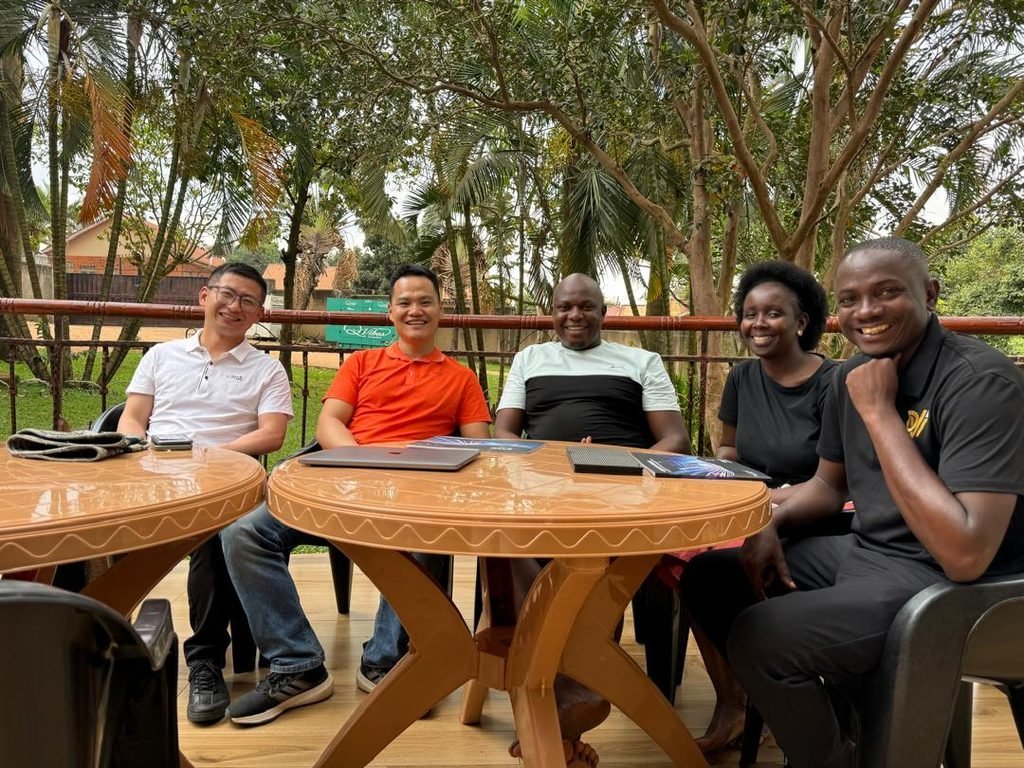
KALE also states it visits overseas clients annually. That behavior typically appears in factories that want to keep relationships close rather than treat each order as one-off. For African buyers specifically, a supplier willing to engage remotely and, where viable, in person, usually means steadier after-sales expectations.
3. Manufacturing: Factory & Production Lines
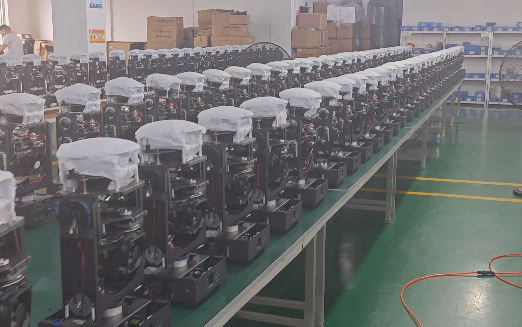
Brand trust ultimately comes down to “can they build this consistently.” Our company runs multiple complete production lines and a coordinated system of 100+ material suppliers.
Unpacking those two:
- Multiple production lines mean core processes stay in-house with controlled takt time, so lead time and consistency do not depend on outsourcing;
- A 100+ supplier system means critical materials (power supplies, optics, housings, cabling) have alternatives and negotiation leverage, so a single supply disruption can be absorbed.
For the buyer, in-house lines matter beyond “they can make it” — three things: consistency (tight batch-to-batch variance in color and power), lead time (fewer outsourced steps means scheduling is not held hostage), and iteration (faster revision from feedback). A trading supplier is often passive on all three — it sells someone else’s capacity; a manufacturer sells its own.
4. Quality & Compliance: Risk Pushed Upstream
In manufacturing, ~70% of trust comes from “do they catch it before it ships.” KALE documents two gates:
- 48-hour testing — key products go through continuous aging/testing before the next stage;
- Outgoing inspection marking — each unit ships with an inspection tag, making accountability traceable.
The practical value: you receive goods that passed batch-consistency screening, not “it lit up once” samples. The stated safety orientation — constant-current/constant-voltage power, flame-retardant/metal housing, anti-drop accessories — should be read as engineering trade-offs that reduce on-site accident probability, not as certification promises.
On certifications: different markets require different marks (CE, RoHS, and for Africa often SONCAP for Nigeria or PVOC for Kenya/East Africa — see Section 8). As an export manufacturer KALE typically prepares the certifications required for the destination market.
5. Built for Demanding Conditions — What African Buyers Should Check
African venues — event centers, churches, hotels, concert halls, and outdoor festivals — often run in conditions that quietly kill cheap lighting: unstable grid voltage, high ambient heat, dust, and long-duty cycles. This section is a buyer’s checklist; where KALE’s publicly stated features map to a checkpoint, we note it, but we do not claim ratings that are not documented.
- Power stability. Many African grids run ~220–240 V / 50 Hz but with swings and brownouts. Look for regulated power (KALE states constant-current/constant-voltage power supplies) and confirm the exact input-voltage range for your country before ordering. A unit that tolerates sag and surge simply fails less on site.
- Heat & dust. High ambient temperature shortens component life; dust clogs fans and optics. Favor metal housings with real thermal design and accessible cleaning, and ask about duty-cycle ratings in hot climates. (Do not assume a specific IP rating unless KALE documents it for the model.)
- Structural safety. Overhead rigging in humid, vibrating environments demands secure mounting and anti-drop measures — KALE’s stated anti-drop accessories are the right instinct; verify the actual rating for your rig.
- Spares & support. In distant markets, a failed unit is a bigger problem than locally. Prioritize suppliers who can ship spares and guide remotely (see Section 9).
Practical buyer moves. Where the grid is unstable, many African operators pair fixtures with voltage stabilizers or UPS-backed distribution at the venue — cheap insurance that protects both the lights and the show. For outdoor or semi-outdoor use, favor fixtures with documented weather resistance and plan a cleaning schedule for dusty seasons; a unit that is easy to service outlasts a sealed one you cannot open. None of this is KALE-specific — it is how durable installs are built anywhere the environment is unforgiving.
The takeaway: for African conditions, “bright” is the easy part — surviving the grid, the heat, and the dust is what protects your event and your budget.
6. Product Range Overview
KALE’s available series cover the mainstream stage-lighting categories (exact models and power/lux/channel specs are on the official specification sheets — this page does not invent them):
| Category | Typical use | One-line positioning |
| Beam / wash moving heads | Dynamic beams & color for concerts, theaters, large events | Core of dynamic expression; widest model range |
| Bee-eye / matrix fixtures | 3D spots, patterns, matrix effects | Source of visual depth and “tech” feel |
| LED PAR lights | Front light, wall wash, fill | High-volume, cost-effective base light |
| Laser lights | Audience interaction, atmosphere | Strong memory point; mind venue safety rules |
| Pixel bars / wall washers | Architecture & backdrop contours, linear light | Static and dynamic set pieces |
| DMX consoles & signal gear | Programming and signal distribution | The piece that turns the above into “a system” |
To shortlist models by scenario, see the English buying guide; overseas buyers can also review the one-stop solutions page.
7. OEM / ODM
For brand owners, integrators, and private-label customers, two documented capabilities matter most:
- OEM / ODM — private labeling and a degree of functional/cosmetic customization.
Paired with this is the configuration-plan and installation-drawing design capability — you give venue dimensions and purpose, and the factory returns a lighting plan and install drawings, not just a quotation. One boundary to set: “provides plan and drawing design” is not the same as “free” — whether it is included in the quote, and how many revision rounds are billed, must be confirmed at the inquiry stage.
8. Shipping to Africa & Logistics
For African buyers, “can they ship” is rarely the question — “can they ship reliably and economically to my country” is. KALE states coverage of 200+ regions, which spans major African markets — Nigeria, Kenya, South Africa, Ghana, and Tanzania among them — typically routed through hubs such as Lagos, Mombasa, and Durban. Two practical notes:
- Container vs. air. For event-scale orders, sea freight in consolidated containers is the cost-efficient route; KALE’s documented container-loading capability matters here. Sample and urgent orders go air.
- Import compliance is on you, but prepare early. Common African requirements include SONCAP (Nigeria) and PVOC (Kenya and broader East Africa); CE/RoHS paperwork usually underpins them. Request the exact certificates for your destination and build clearance time into your plan — this is general import knowledge, not a KALE-specific claim.
Consolidation vs. direct. If your order is below a full container, ask about LCL (less-than-container-load) or consolidation through a regional hub — usually cheaper than air and faster than waiting for a full container. Clearance timing. Build 2–4 weeks (sometimes more at peak) into your plan for inspection and customs, and keep certificate numbers consistent across the invoice, packing list, and unit labels to avoid hold-ups. These habits separate a smooth first order from a stressful one.
The point: our already serves 200+ regions has likely navigated most African routing and documentation patterns; use that maturity, but still confirm the specifics for your port.
9. Support & After-Sales
An export factory’s after-sales reputation is often tested harder overseas than at home. KALE’s stated commitments are:
- 7×24 support, with 2-hour response on technical issues;
- Shipping to 200+ regions;
- Annual overseas client visits, pushing support to the field.
Read together: 7×24 answers the “can’t reach anyone across time zones” pain, 2-hour response sets the “issues don’t drag” expectation, and field visits deepen the relationship. For the buyer, real value is not the slogan but writing response time, spare-part lead time, and remote-guidance method into the contract — the public statement is intent; the clause is the guarantee.
10. Why Choose KALE Over a Trading Company
Against the broader “stage lighting supplier” pool, the differences that matter:
- Integrated vs. trading — one accountable manufacturing entity instead of layered handoffs;
- Auditable factory vs. photo reseller — documented lines, supplier system, and outgoing inspection make trust verifiable;
- One-stop plan vs. single-product sale — from lighting concept and drawings to shipment, lowering your coordination cost.
If you are still at the “how do I choose a supplier” stage, start with the English manufacturer guide, build the selection framework, then treat this page as the “is this specific company right?” column. The two interlink into a “generic selection → specific vendor” reading loop.
11. FAQ
Q1: Is KALE stage lighting available in Africa / do you ship to Africa? Per KALE’s public profile, it ships to 200+ regions, which includes African destinations via its freight and consolidator network. Confirm the exact route and Incoterms for your country at inquiry.
Q2: What voltage do KALE lights use — will they work on African grids? Export models are built for international voltage ranges; KALE states regulated constant-current/constant-voltage power supplies. Most African grids run ~220–240 V / 50 Hz, but confirm the exact input range for your country with KALE before ordering — do not assume.
Q3: Can KALE lights handle heat and dust? High heat and dust are real failure modes in many African venues. Look for metal housings with thermal design, accessible cleaning, and verified duty-cycle ratings; ask KALE for the model’s environmental specifications rather than assuming an IP rating.
Q4: What are KALE’s MOQ and OEM/ODM terms? KALE publicly supports OEM/ODM customization, plus configuration-plan and installation-drawing design. Whether design is included free and how revisions are billed must be confirmed at inquiry.
Q5: What products does KALE mainly make? Beam/wash moving heads, bee-eye/matrix fixtures, LED PAR lights, lasers, pixel bars/wall washers, and DMX consoles/signal gear. Model specs are on the official sheets.
Q6: How do I get a quote or samples from KALE? Submit venue information (size, purpose, budget, target market) through KALE’s official inquiry channel to receive a lighting plan, drawings, and quotation. This page does not replace a formal inquiry; the real quote is the official reply.
12. Next Steps: From “Know the Factory” to “Get the Plan”
You have completed step one of vetting — confirming this entity is real and its chain is controllable. Here is a low-risk path forward:
- Browse the product range (Section 6) and shortlist the fixtures you need;
- Build your comparison using the manufacturer guide, placing KALE in the framework;
- Submit venue info to KALE’s inquiry channel for a lighting plan and drawings;
- Request samples / schedule an audit — verify with measurement and site, not web copy;
- Confirm certifications & terms — destination-market certs, response time, and spare-part lead time in the contract;
- Trial batch → review → scale, keeping the new-supplier learning cost minimal.