If you are new to stage lighting, one of the first questions you will ask is: what are the three basic elements of stage lighting? Whether you are lighting a concert, a church service, a theater performance, or a private event, understanding these three elements will help you create better lighting and choose the right equipment.
The three basic elements of stage lighting are:
Intensity
Color
Direction
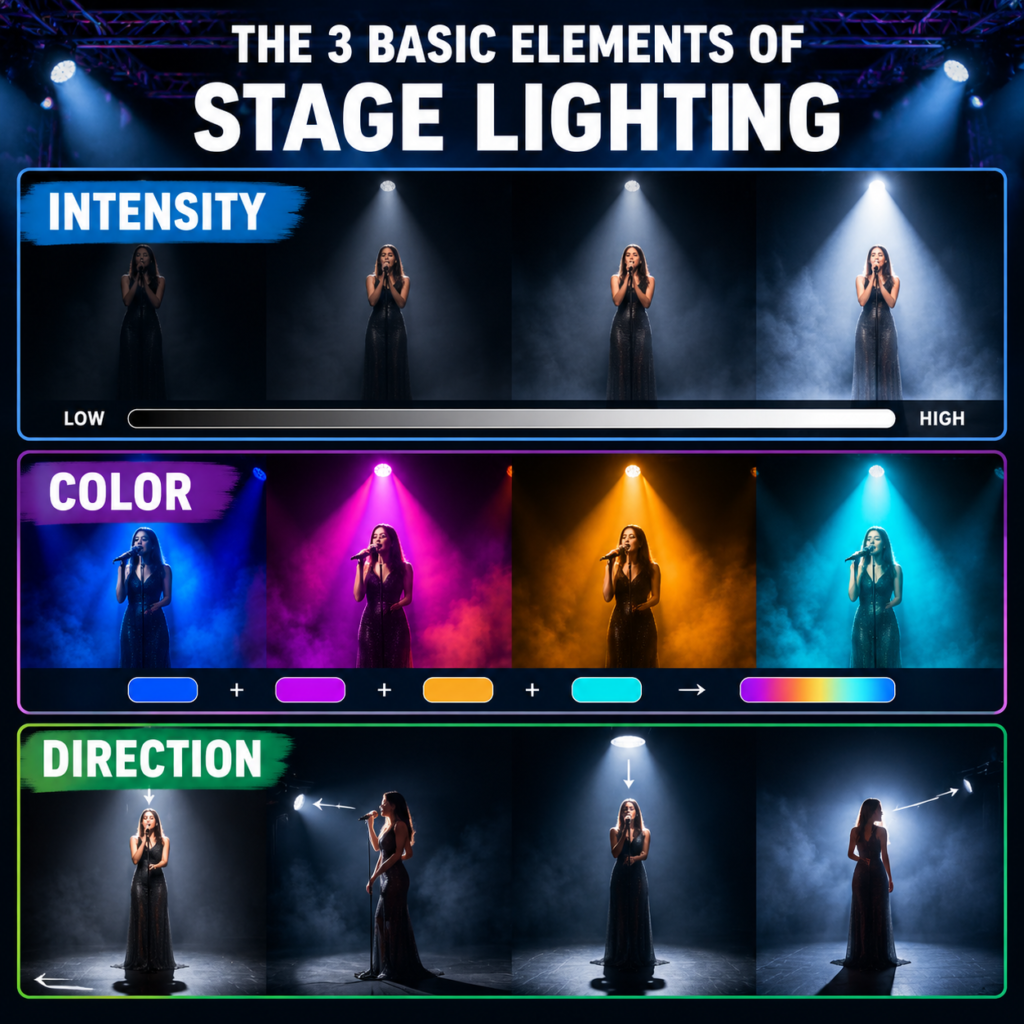
These three elements work together. If one is missing or poorly controlled, the lighting will not look professional. In this guide, we explain each element in detail, how they interact, and how to apply them in real stage lighting projects.
Why These Three Elements Matter
Stage lighting is not just about making the stage bright. It is about controlling light so the audience sees what you want them to see, feels the mood you want them to feel, and stays focused on the performance.
Professional lighting designers use intensity, color, and direction to:
Make performers visible
Create mood and atmosphere
Guide the audience’s attention
Separate the stage from the background
Support the story, music, or message
Whether you are using a moving head beam light, an LED PAR light, or a full DMX-controlled system, these three elements are the foundation.
Element 1: Intensity
Intensity means how bright or dim the light is. It is the most basic element of stage lighting. Without proper intensity, the audience cannot see the performers clearly.
Intensity is controlled in several ways:
By adjusting the brightness of the fixture
By using a dimmer
By changing the distance between the light and the subject
By using different power ratings of fixtures
Why Intensity Matters
Intensity creates focus and contrast. A bright light on a performer makes them stand out. A dim light on the background makes the stage feel deeper.
In concerts, intensity is used to build energy. A sudden increase in brightness can create impact. A slow fade to darkness can create emotion.
In churches, intensity needs to be balanced. The congregation must see the speaker and the stage, but the lighting should not be too harsh or distracting.
In theater, intensity is used to guide the audience’s eye. When one actor is lit brightly and others are dim, the audience knows where to look.
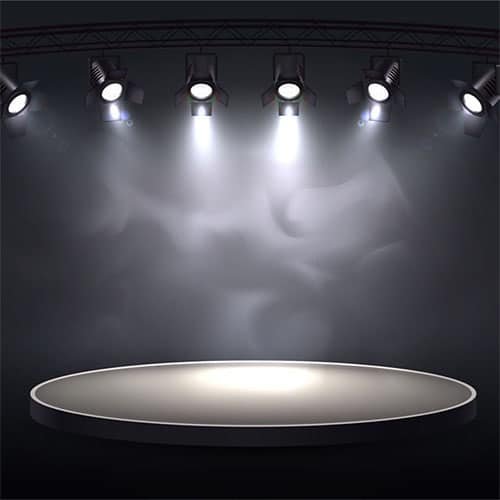
How to Control Intensity
Most professional stage lights today are controlled by DMX512. A DMX controller allows you to adjust the intensity of each fixture individually or in groups.
If you are buying stage lights, look for fixtures with:
Smooth dimming
High brightness output
Reliable DMX control
Good heat management
At KALE Lighting, our MOVING HEAD BEAM LIGHTS, LED PAR LIGHTS, are designed for smooth intensity control and stable performance.
Element 2: Color
Color is the second basic element of stage lighting. Color creates mood, emotion, and visual identity.
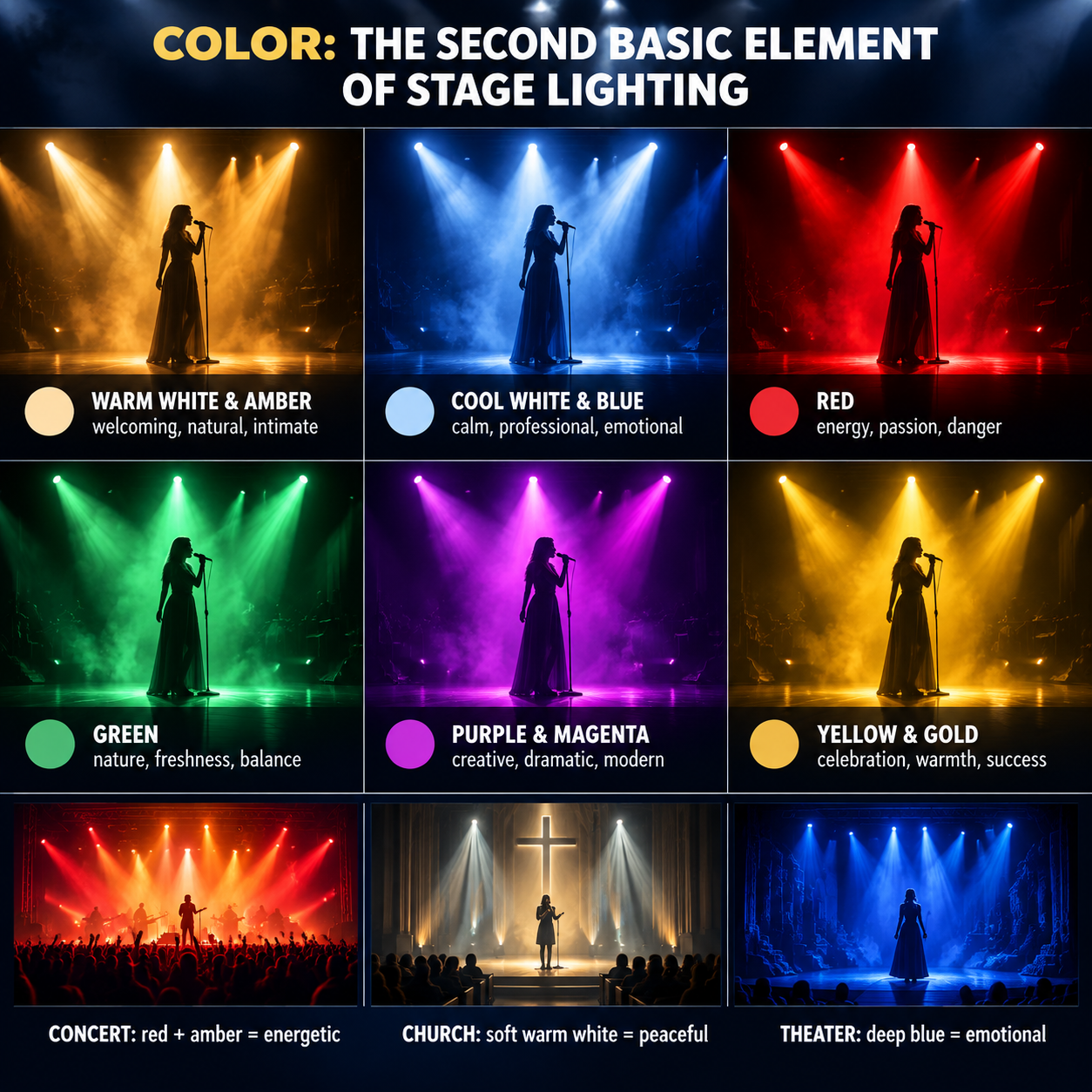
Different colors send different messages:
Warm white and amber — welcoming, natural, intimate
Cool white and blue — calm, professional, emotional
Red — energy, passion, danger
Green — nature, freshness, balance
Purple and magenta — creative, dramatic, modern
Yellow and gold — celebration, warmth, success
Why Color Matters
Color helps the audience feel the performance. A concert with red and amber lighting feels energetic. A church service with soft warm white feels peaceful. A theater scene with deep blue feels emotional.
Color also helps separate the stage from the background. By using different colors on the stage and the backdrop, you create depth and contrast.
How to Control Color
Modern LED stage lights offer RGBW or RGBWA+UV color mixing. This allows you to create almost any color without changing gels or filters.
A DMX controller lets you:
Set static colors
Create color fades
Run color chases
Sync color changes with music
Element 3: Direction
Direction is the third basic element of stage lighting. It describes where the light comes from and where it points.
Direction affects:
How the performer looks
How shadows fall
How the stage feels
How the audience perceives depth
Common Lighting Directions
Front light — comes from the front of the stage. It makes performers visible but can flatten the face.
Back light — comes from behind. It creates a halo effect and separates the performer from the background.
Side light — comes from the sides. It creates depth and texture.
Top light — comes from above. It creates strong shadows and dramatic effects.
Uplight — comes from the floor. It creates dramatic, larger-than-life looks.
Why Direction Matters
Direction creates shape and mood. A performer lit only from the front looks flat. Add back light and side light, and they look three-dimensional.
In concerts, moving head beam lights are used to change direction constantly. The beams sweep across the stage and audience, creating energy and movement.
In churches, direction is used to create a warm, welcoming atmosphere without harsh shadows.
In theater, direction is carefully planned to support the story. A single spotlight from the side can create a powerful dramatic moment.

How to Control Direction
Direction is controlled by:
The position of the fixture
The angle of the fixture
The use of moving heads
The use of trusses and stands
Moving head beam lights are especially useful because they can change direction instantly. They can pan, tilt, and create dynamic beam effects.
KALE Lighting offers MOVING HEAD BEAM LIGHTS, SPOT LIGHTS, and WASH LIGHTS that are perfect for dynamic direction control.
How the Three Elements Work Together
Intensity, color, and direction are not separate. They work together.
For example:
A bright, warm, front light makes a speaker look clear and welcoming.
A dim, blue, side light creates a sad or mysterious mood.
A bright, red, back light creates energy and excitement.
A soft, warm, top light creates a gentle, intimate feeling.
When you combine these three elements with movement, smoke, and music, you create a full stage lighting experience.
Choosing the Right Stage Lights
When you choose stage lights, think about the three basic elements:
Intensity — How bright is the fixture? Can it dim smoothly?
Color — Does it have RGBW or RGBWA+UV color mixing?
Direction — Can it move? Can it be positioned easily?
At KALE Lighting, we supply professional stage lighting equipment for concerts, events, churches, theaters, and parties. Our product range includes:
Moving Head Beam Lights
LED PAR Lights
LED Blinder Lights
Strobe Lights
Fog Machines
DMX Controllers
We serve clients across Africa and around the world, offering factory-direct pricing, reliable after-sales support, and fast shipping.
FAQ
What are the three basic elements of stage lighting?
The three basic elements of stage lighting are intensity, color, and direction.
Why is intensity important in stage lighting?
Intensity controls brightness and focus. It makes performers visible and creates contrast and mood.
Why is color important in stage lighting?
Color creates emotion and visual identity. It helps separate the stage from the background and supports the performance.
Why is direction important in stage lighting?
Direction creates shape, depth, and shadows. It affects how performers look and how the audience perceives the stage.
What is the best stage light for concerts?
Moving head beam lights, LED PAR lights, blinders, and strobes are the most common stage lights for concerts.
What is the best stage light for churches?
LED PAR lights, moving head wash lights, and soft front lights are ideal for churches.
How do I control stage lights?
Most professional stage lights are controlled by DMX512. A DMX controller lets you control intensity, color, direction, and effects.
Conclusion
Understanding the three basic elements of stage lighting — intensity, color, and direction — is the first step to creating professional lighting for any event. Whether you are lighting a concert, a church, a theater, or a party, these three elements will guide your design and help you choose the right equipment.
At KALE Lighting, we are committed to providing high-quality stage lighting solutions for clients in Africa and around the world. If you need help choosing the right stage lights, contact us today.
Facebook: KALE Lighting
WhatsApp: +86 188 1931 7886
Website: www.hello-lite.com | www.kalelight.com